The Lesser of Two Evils? Lithium Mining's Environmental Impact vs. Fossil Fuels

The Lesser of Two Evils? Lithium Mining’s Environmental Impact vs. Fossil Fuels

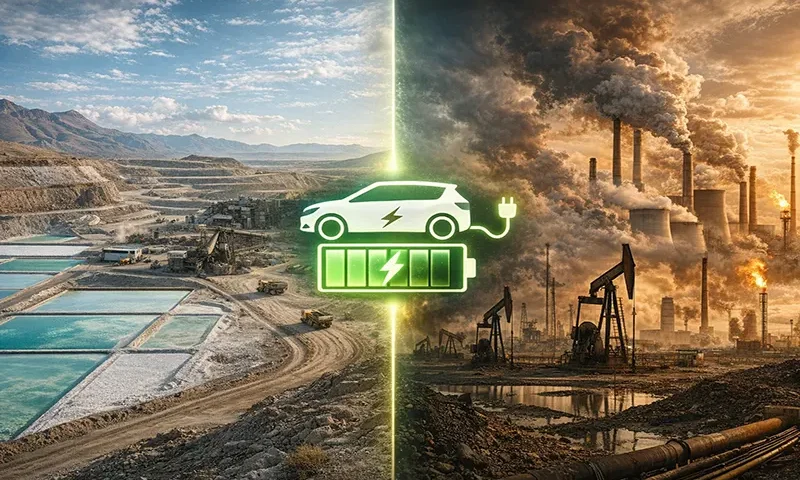
The global push for electric vehicles (EVs) is largely driven by the urgent need to mitigate climate change by reducing greenhouse gas emissions. However, the environmental footprint of EVs isn’t zero. A significant point of concern, particularly for critics, is the environmental impact of lithium mining for electric vehicle batteries. While crucial for the energy transition, it’s essential to put this impact into perspective when compared to the well-documented, catastrophic effects of fossil fuels.

The Environmental Impact of Lithium Mining

Lithium, a critical component of most EV batteries, is primarily extracted through two main methods:

  1. Hard-rock Mining: This involves traditional open-pit mining to extract lithium-bearing minerals (like spodumene).
    • Impacts: Habitat destruction, landscape alteration, dust pollution, large energy consumption (for crushing and processing ore), and waste rock generation. It also requires significant water.
  2. Brine Extraction (from Salt Flats): Lithium-rich brine is pumped from underground reservoirs and left to evaporate
Read More ...
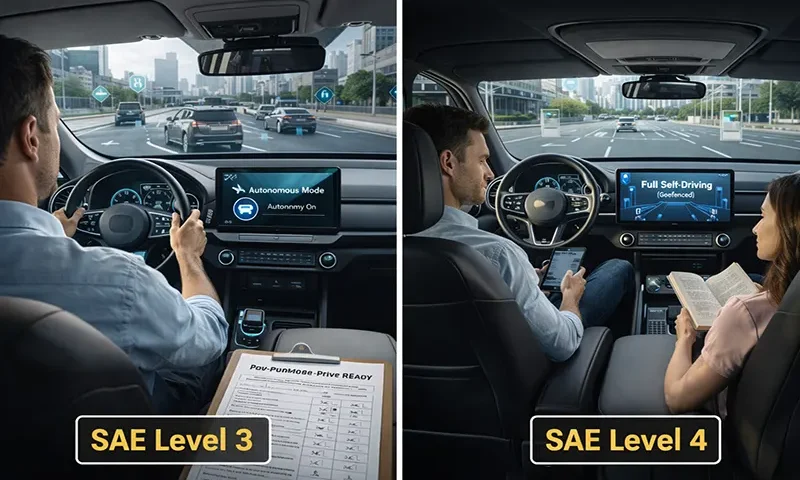
Beyond the Wheel: Demystifying SAE Level 3 vs. Level 4 Autonomous Driving

Beyond the Wheel: Demystifying SAE Level 3 vs. Level 4 Autonomous Driving

The landscape of autonomous driving is often characterized by ambitious promises and evolving terminology. At its core, the industry relies on the SAE (Society of Automotive Engineers) International standards to classify levels of driving automation, ranging from Level 0 (no automation) to Level 5 (full automation in all conditions). Among these, the distinction between SAE Level 3 and Level 4 autonomous driving technology is particularly crucial, representing a significant leap in technological capability and, more importantly, a fundamental shift in the driver’s role and responsibility.

Both Level 3 and Level 4 systems are considered “conditional automation,” meaning the automated driving system (ADS) performs all dynamic driving tasks under certain conditions. However, the critical difference lies in the driver’s intervention requirement and the system’s ability to handle failure.

SAE Level 3: Conditional Automation (Eyes Off, Still Alert)

At SAE Level 3, the ADS can manage all aspects of driving (steering, … Read More ...

Regional Distribution of EV Market Share by Country in 2024

Regional Distribution of EV Market Share by Country in 2024

Electric vehicles (EVs) have been gaining significant traction in the automotive industry as more countries are pushing for a transition to sustainable and eco-friendly transportation. The market for EVs is rapidly evolving, with various countries exhibiting different levels of enthusiasm and adoption rates. By 2024, the regional distribution of EV market share by country is expected to present an interesting landscape of growth and competition.

Europe:

Europe is poised to maintain its position as a leading market for EVs, driven by strong government initiatives and stringent emissions regulations. Countries such as Norway, the Netherlands, and Germany are expected to continue their dominance in EV adoption. Norway, in particular, has set ambitious targets to phase out the sale of internal combustion engine vehicles by 2025, further propelling the growth of EV market share.

China:

China, the world’s largest automotive market, has been a major player in the EV industry. The Chinese … Read More ...

Global Electric Vehicle Market Share Trends 2024

Global Electric Vehicle Market Share Trends 2024

The global electric vehicle (EV) market is experiencing rapid growth and evolution, driven by technological advancements, environmental concerns, and government initiatives. As we look ahead to 2024, several key trends are expected to shape the market share of electric vehicles globally.

1. Increasing Market Penetration

The market share of electric vehicles is anticipated to grow significantly by 2024. With advancements in battery technology, reducing costs of production, and increasing consumer awareness about environmental sustainability, electric vehicles are likely to capture a larger percentage of the overall automotive market.

2. Government Policies and Incentives

Numerous governments around the world are establishing policies and offering incentives to promote the adoption of electric vehicles. Incentives such as tax credits, subsidies, and infrastructure investments are expected to drive consumer interest and boost the market share of electric vehicles.

3. Technological Advancements

The electric vehicle market is poised to witness significant technological advancements by 2024. … Read More ...

Car Industry Competition - American Market: VW’s Top Priority

Car Industry Competition – American Market: VW’s Top Priority

Car Industry Competition - American Market: VW’s Top Priority

Car Industry Competition – Volkswagen AG will be making the American market a top priority. As such, it plans to roll out auto-fighter vehicles to compete closely with its rivals.

The German automaker plans to build an enticing sport utility to rival the Toyota Motor Corp.?s Camry – a midsize sedan. This is part of VW?s effort to stage a positive comeback in the American soil where it was once a dominant player.

The Wolfsburg, Germany-based automaker will be rolling out the Tiguan, a small sport utility, to its lineup in the United States. The said SUV was unveiled this week at the Frankfurt Motor Show. Launching new product lines is vital to the automaker. It will help VW?s plant to triple American sales over the next decade to reach one million vehicles – 800,000 of them VW-brand cars and trucks and 200,000 Audis.

VW will launch the Tiguan, which … Read More ...