How Southeast Asian Manufacturing Hubs Are Shaping the Future of the Global Auto Industry

How Southeast Asian Manufacturing Hubs Are Shaping the Future of the Global Auto Industry

For decades, the global automotive map was defined by traditional heavyheads in Detroit, Wolfsburg, and Tokyo. Today, the beating heart of automotive assembly and supply-chain reinvention is rapidly migrating southward.

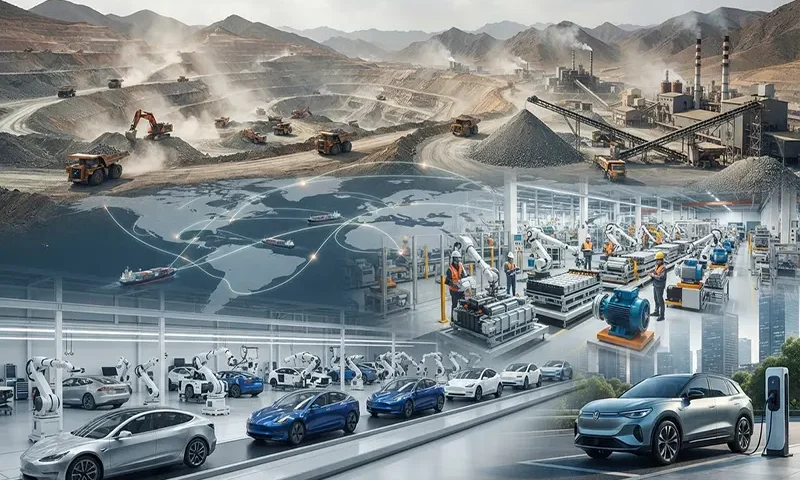
Powered by strategic government policies, abundant critical mineral reserves, and an aggressive influx of global electric vehicle (EV) investment, Southeast Asian manufacturing hubs are transforming from regional consumer markets into indispensable architects of the future global auto industry.

The New Geopolitics of Production: The Rise of the ASEAN Corridor

The evolution of Southeast Asia’s automotive sector has moved far past simple supply-chain diversification or “China Plus One” risk hedging. Instead, the Association of Southeast Asian Nations (ASEAN) bloc has established an integrated, high-value manufacturing powerhouse defined by complementary national specializations:

  • Thailand: Long recognized as the “Detroit of Asia,” Thailand acts as a robust vehicle assembly and export anchor, aggressively expanding into battery pack production and advanced automotive electronics.
  • Indonesia: Leveraging
Read More ...
Why Hybrid Electric Vehicle Adoption Is Outpacing Battery Electric Cars in the Auto Industry

Why Hybrid Electric Vehicle Adoption Is Outpacing Battery Electric Cars in the Auto Industry

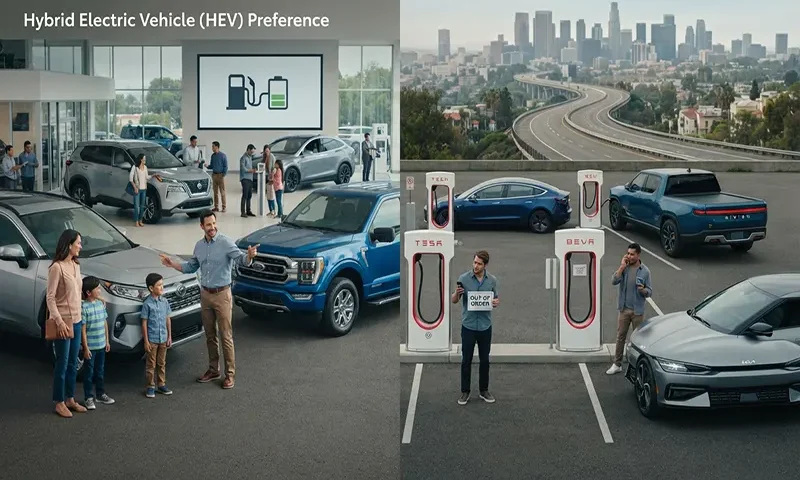
For years, the conventional automotive narrative dictated a straight-line march from internal combustion engines directly to 100% battery-powered electric vehicles (BEVs). Industry analysts and policymakers framed hybrids as a temporary stepping stone—a brief transitional bridge before a fully plugged-in future. Yet, showroom floors and registration data tell a radically different story.

Consumer demand and market realities have collided, positioning hybrid electric vehicles (HEVs) not as a temporary bridge, but as the preferred destination for drivers hesitant to navigate infrastructure gaps, high upfront costs, and range anxiety.

The Friction Points of Pure BEV Adoption

While battery electric vehicles have achieved remarkable technological milestones, they continue to run into stubborn friction points that slow down mass-market conversion:

  • Charging Infrastructure Realities: Persistent bottlenecks, out-of-service public chargers, and stark disparities in charging speed make long-distance travel stressful for drivers without dedicated home charging setups.
  • The Cost and Range Equation: High initial vehicle purchase prices,
Read More ...
How Software-Defined Vehicles and Artificial Intelligence Are Transforming Auto Industry Engineering

How Software-Defined Vehicles and Artificial Intelligence Are Transforming Auto Industry Engineering

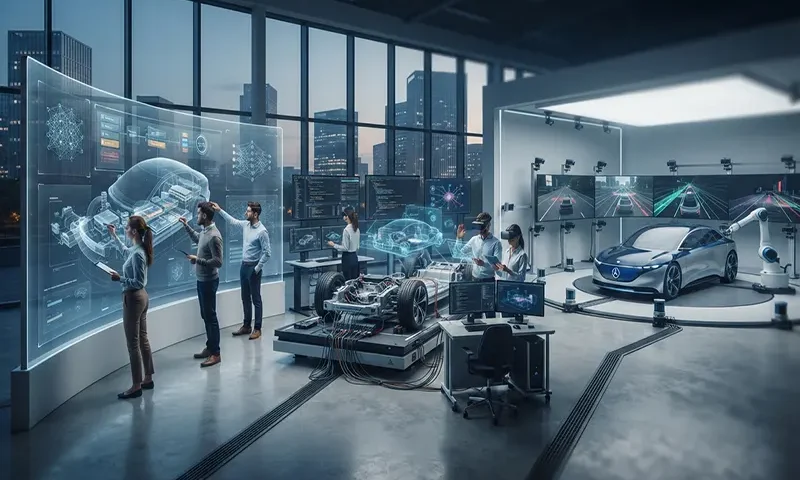
For over a century, the automotive industry defined itself by horsepower, displacement, and mechanical craftsmanship. Engineering success was measured in engine blocks, transmission gear ratios, and chassis dynamics. Today, however, that legendary mechanical race has been eclipsed by lines of code, neural networks, and over-the-air updates.

The convergence of Software-Defined Vehicles (SDVs) and artificial intelligence is fundamentally upending traditional automotive engineering, shifting the entire industrial paradigm from hardware-centric manufacturing to continuous, software-driven mobility ecosystems.

The Shift from Hardware to Software-Defined Architecture

For decades, modern cars operated on decentralized networks choked by dozens—sometimes over a hundred—of disparate Electronic Control Units (ECUs), each running proprietary software from different suppliers. This siloed architecture made updating vehicle features nearly impossible once a car left the factory floor.

The emergence of the Software-Defined Vehicle has shattered this model. Automakers are rapidly transitioning toward centralized domain controllers and powerful vehicle computers that govern distinct zones (such … Read More ...

The Impact of Rare Earth Mineral Supply Chains on the Global Auto Industry EV Transition

The Impact of Rare Earth Mineral Supply Chains on the Global Auto Industry EV Transition

The electric vehicle (EV) transition is frequently framed as a grand battle of battery chemistries—a high-stakes race dominated by lithium, cobalt, and nickel supply chains. However, running parallel to the battery debate is a quieter, potentially more volatile chokepoint that threatens the assembly lines of the world’s leading automakers: the permanent magnets powered by rare earth elements (REEs). While automotive executives and policymakers have poured trillions of dollars into securing cell manufacturing and gigafactory infrastructure, severe vulnerabilities in the upstream and midstream rare earth supply chains pose an existential risk to production continuity, vehicle affordability, and the aggressive speed of the global decarbonization timeline.

The Invisible Engine: Why Rare Earths Matter to EVs

To understand the vulnerability of modern clean mobility, one must look beneath the hood at the propulsion system. The vast majority of long-range, high-efficiency battery electric vehicles rely on permanent magnet synchronous motors (PMSMs). Unlike traditional induction … Read More ...

Failure of the Automotive Industry - The Main Explanation

Failure of the Automotive Industry – The Main Explanation

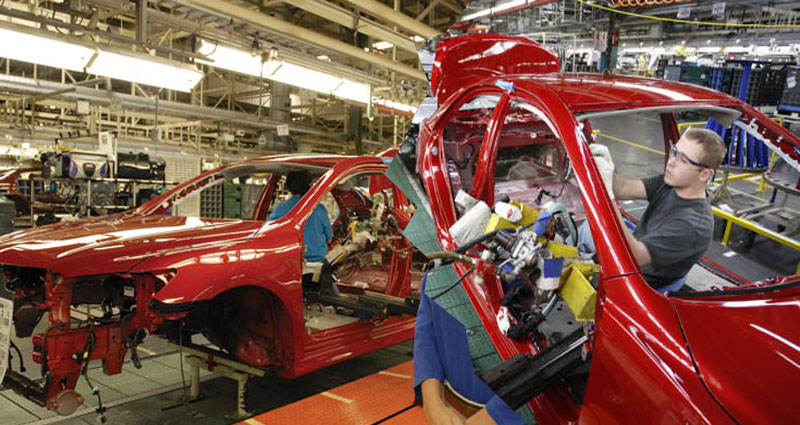
The US automotive industry suffered a fatal blow. Yet anyone who claims that the industry’s demise may be linked to a single root-cause of failure is sadly mistaken. I spent the higher portion of 10 years within that industry many of which in an executive or managerial part.

However, there’s no silver bullet that caused the fall. I say sadly for the reason that a single trigger of failure might be prevented within the future. Within this case, the blame can be put only on the program as a whole generating it complicated to defend against a repeat occurrence.

What the automotive industry suffered was a catastrophic failure brought on by various points of failure. We’re talking systemic failure in its truest form. As an insider within the sector, I can personally attest to a few of the actions (or lack thereof) that pushed the sector to a collapse.

One … Read More ...